The question of whether machines will replace humans has moved from science fiction into everyday conversation. With the rapid rise of artificial intelligence (AI), tools that once seemed futuristic are now part of our daily lives—writing emails, analyzing data, diagnosing diseases, and even creating art. Naturally, this progress raises a deeper concern: Are we building something that could eventually replace us?
To answer that, we first need to understand the difference between artificial intelligence and human intelligence—not just in terms of capability, but in terms of purpose, adaptability, and meaning.
Understanding Artificial Intelligence
Artificial intelligence refers to machines designed to perform tasks that typically require human intelligence. These include learning from data, recognizing patterns, making decisions, and solving problems. AI systems are trained using algorithms and large datasets, allowing them to improve performance over time.
Today’s AI can outperform humans in specific areas. For example, it can process massive amounts of data in seconds, detect patterns that humans might miss, and operate continuously without fatigue. In industries like healthcare, finance, and logistics, AI has already proven to be more efficient and accurate in certain tasks.
But efficiency is only one part of intelligence.
What Makes Human Intelligence Unique?
Human intelligence is far more complex and multidimensional. It goes beyond logic and data processing. Humans possess emotional intelligence, creativity, intuition, ethical reasoning, and the ability to adapt to entirely new situations without prior training.
A human can walk into a completely unfamiliar situation, understand context, read emotions, and make decisions based on values—not just data. We can imagine things that don’t yet exist, create meaning out of chaos, and connect deeply with others.
These qualities are not easily programmable.
AI vs Human Intelligence: The Core Differences
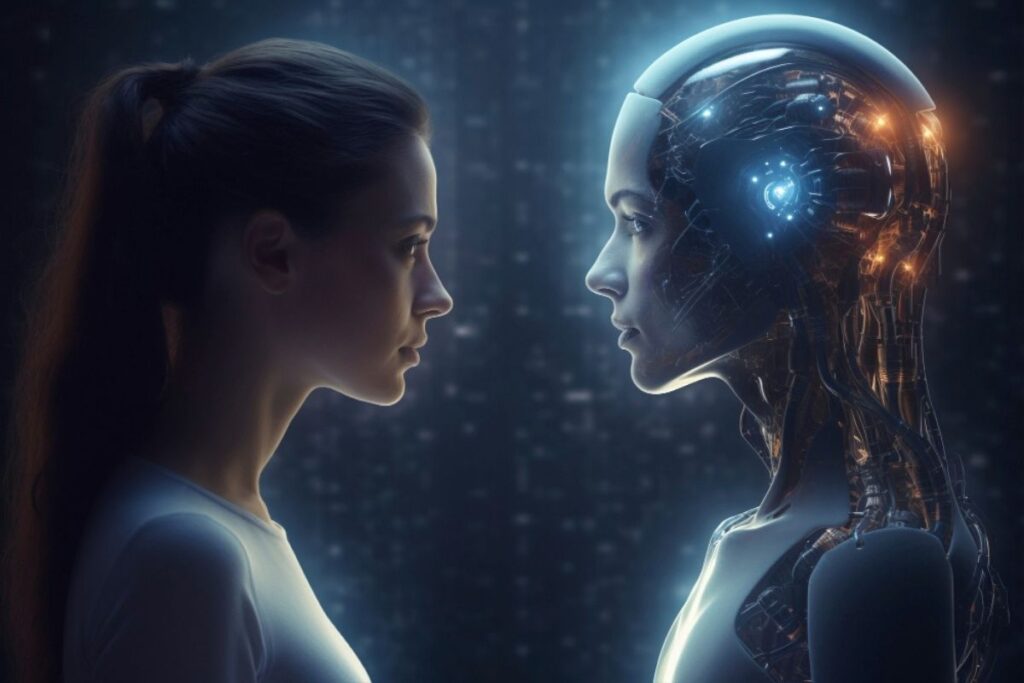
At a surface level, AI may appear smarter in many tasks. It can calculate faster, analyze deeper, and execute tasks with high precision. However, AI operates within boundaries. It depends on the data it is trained on and the objectives it is given.
Humans, on the other hand, are not limited by predefined datasets. We learn from experiences, emotions, failures, and social interactions. Our intelligence evolves in unpredictable ways.
For example, an AI system can write an article based on patterns in language, but it does not truly understand the emotions behind the words. It cannot experience joy, fear, or empathy. It simulates understanding—it doesn’t live it.
This distinction is critical.
Will AI Replace Jobs?
One of the biggest fears surrounding AI is job loss. And to be fair, this concern is not unfounded. AI is already automating repetitive and routine tasks across industries. Jobs that involve data entry, basic analysis, or predictable workflows are increasingly being handled by machines.
However, history shows that technological advancement doesn’t just eliminate jobs—it transforms them. When computers were introduced, many feared widespread unemployment. Instead, new industries and roles emerged.
The same is happening with AI.
While some jobs may disappear, many new roles are being created—AI specialists, data analysts, prompt engineers, automation experts, and more. Additionally, roles that require creativity, emotional intelligence, leadership, and critical thinking are becoming more valuable.
The future is not about humans vs machines. It’s about humans working with machines.
The Power of Collaboration
AI is best seen as a tool, not a replacement. When used effectively, it enhances human capabilities rather than replacing them. A doctor using AI can diagnose diseases more accurately. A writer using AI can generate ideas faster. A business owner can make smarter decisions using AI-driven insights.
In each case, the human remains at the center—guiding, interpreting, and making final decisions.
This collaboration creates a powerful combination: the speed and precision of machines, combined with the judgment and creativity of humans.
The Limits of Artificial Intelligence
Despite its rapid growth, AI still has significant limitations. It lacks true understanding, consciousness, and self-awareness. It cannot think independently outside its programming. It does not have desires, goals, or a sense of purpose.
Moreover, AI systems can inherit biases from the data they are trained on. Without careful oversight, they can make flawed or even harmful decisions. This is why human supervision remains essential.
Another important limitation is adaptability. While AI can be trained for specific tasks, it struggles in situations that require common sense or moral judgment—areas where humans excel naturally.
The Ethical Question
Beyond capability, there is also an ethical dimension to this discussion. Even if machines could replace humans in certain areas, should they?
Human society is built on values, relationships, and shared experiences. Replacing humans entirely would not just be a technological shift—it would be a cultural and philosophical one.
Most experts agree that the goal of AI should not be to replace humans, but to improve quality of life. The focus should be on creating systems that support human well-being, not eliminate human involvement.
The Future: Replacement or Evolution?
So, will machines replace humans?
The more realistic answer is: No, but they will change what it means to be human in the workplace and beyond.
AI will continue to evolve and take over repetitive and technical tasks. But at the same time, it will push humans to focus on what we do best—thinking creatively, solving complex problems, building relationships, and making ethical decisions.
In a way, AI is not replacing human intelligence—it is forcing it to evolve.
Final Thoughts
The fear of being replaced by machines is understandable, especially in a world where technology is advancing at an unprecedented pace. But the reality is far more balanced.
Artificial intelligence is powerful, but it is not human. It does not feel, dream, or understand life the way we do. It is a tool—one that can either empower us or challenge us, depending on how we choose to use it.
The future will not be dominated by AI alone, nor by humans resisting it. Instead, it will belong to those who learn how to combine the strengths of both.
Because in the end, intelligence is not just about speed or accuracy—it’s about meaning. And that is something only humans can truly create.